LottoGo UK Guide
LottoGo Registration and KYC: Account Setup for UK Players
 Available in GB
LottoGo registration and KYC is the practical setup work behind a Great Britain-facing gambling account. Identity verification is part of the account and the withdrawal flow because LottoGo, like every UKGC-licensed remote operator, is required to confirm age, identity and payment ownership. This guide walks through the registration-to-withdrawal sequence, the UK rules that shape what an operator can ask for, and the readiness steps that make a smooth first cash-out more likely. Exact accepted-document lists and processing windows are not stated as fixed values, because those were not verified from official LottoGo sources for this page.
Discover everything about lottogo here.

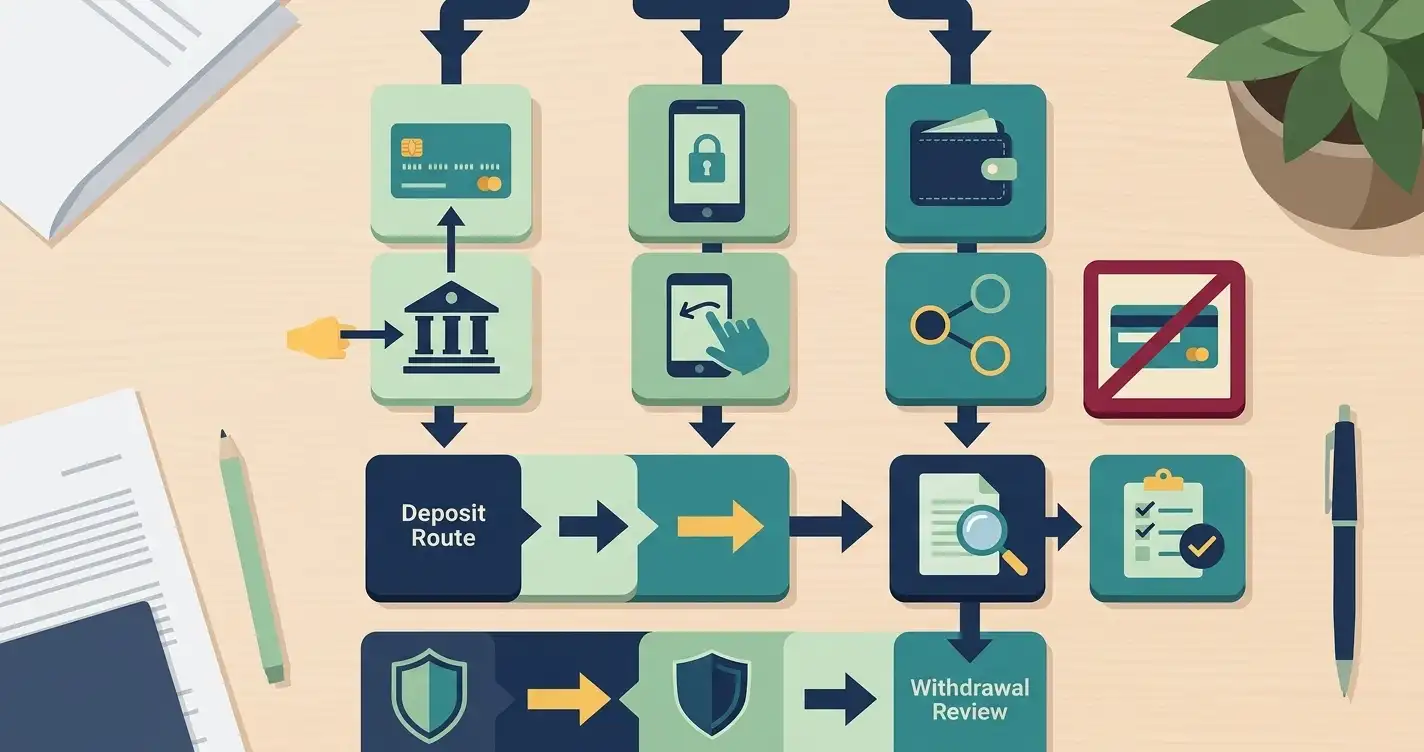
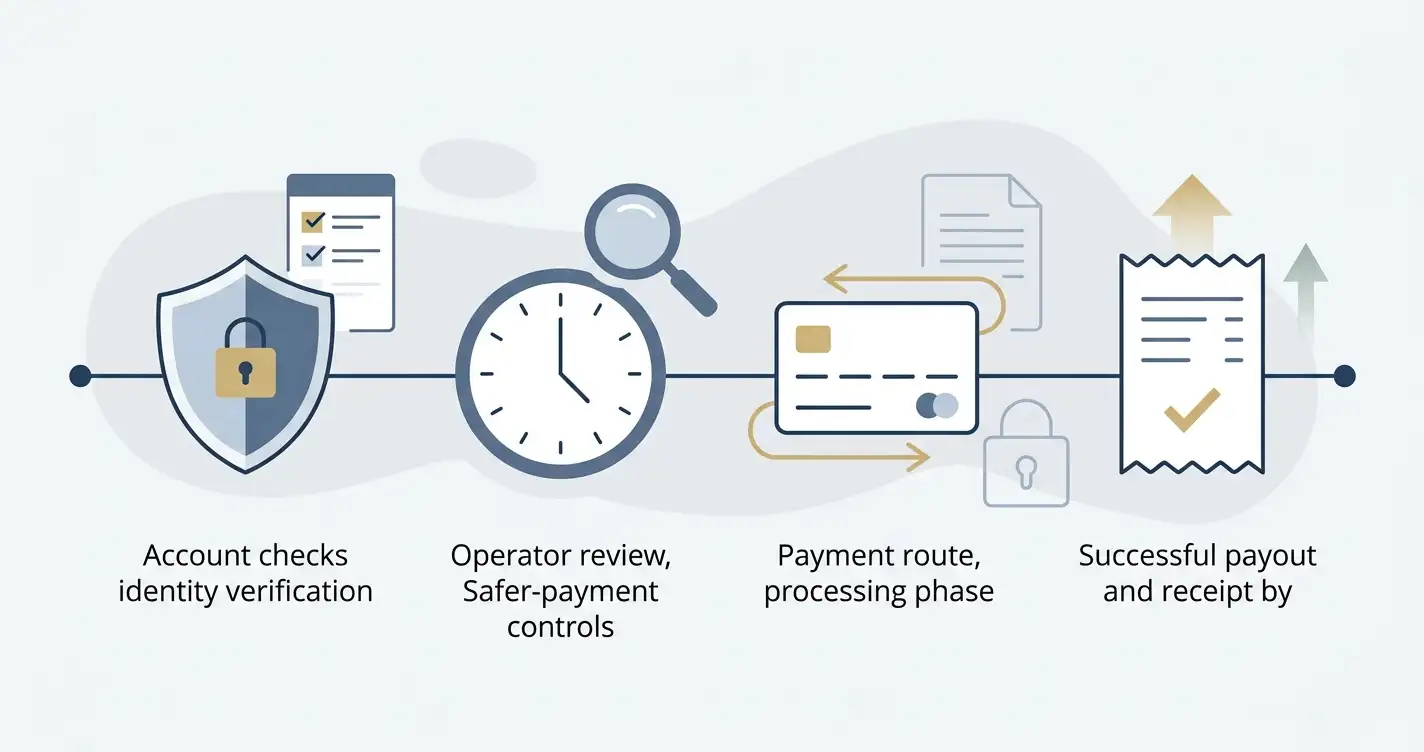
- Registration-to-withdrawal readiness flow
- UK rules that shape what LottoGo can ask for
- Identity verification: what to expect generally
- Payment ownership and the deposit route
- Practical pre-registration checklist
- If you plan to claim the welcome offer
- Safer-gambling settings inside the account
- Registering on mobile
- Licence context for the account
- Before sending verification evidence
- From a finished account to a clean withdrawal
- LottoGo registration and KYC FAQ
Registration-to-withdrawal readiness flow
The LottoGo account sequence runs along a predictable shape. Each step depends on the previous one, and shortcuts at the registration stage usually surface as friction at the withdrawal stage.
- Age confirmation and Great Britain eligibility. UKGC licensees serve adults aged 18 or over, and the operator must check age at registration.
- Account details: name, address, date of birth, contact email and phone. Use the same details that appear on the funding instrument you intend to use.
- Financial-limit prompt before the first deposit. Operators must surface this prompt so a deposit cap is chosen up front, not after a loss run.
- Deposit-method registration in the cashier, using a Visa or Mastercard debit card, Apple Pay, PayPal or Google Pay as covered on the deposits and withdrawals page.
- Identity verification, which can run automatically against electronic data or can require document evidence depending on the account state.
- Safer-gambling settings: deposit limits, reality checks, time-outs and self-exclusion options on the account screen.
- Withdrawal readiness, where a matched name, finished verification and consistent payment route give the cleanest payout path.
UK rules that shape what LottoGo can ask for
A LottoGo account is not just a username and password. Great Britain remote licensees must run customer-interaction systems that identify, act on and evaluate harm indicators from the point an account is opened. Those indicators include spend, spending patterns, time gambling, gambling behaviour, customer-led contact about a problem, use of safer-gambling tools, and account-level signals such as repeated chargebacks.
The financial-limit prompt sits at the start of the journey. From 31 October 2025, Great Britain operators are required to prompt customers to set a deposit limit before the first deposit, and to make that limit easy to review and alter later. The LottoGo registration flow surfaces deposit, session, loss and reality-check controls inside the account area.
Remote licensees also participate in the national multi-operator self-exclusion scheme. GAMSTOP lets a person self-exclude from online gambling operators with one request and blocks access to websites and apps run by Great Britain-licensed gambling businesses for the chosen exclusion period.
Identity verification: what to expect generally
Identity verification is a verified part of the LottoGo account and withdrawal process. It is not unique to LottoGo: every UKGC licensee runs it, and it covers age, identity and payment-source ownership at minimum. Affordability and source-of-funds checks can also apply where account behaviour points to it.
Some checks run automatically against electronic data without any document upload, especially for low-risk account states. Others trigger a document request. Avoid treating any old review table that promises a specific verification document set or a fixed processing time as current LottoGo policy; those secondary values were not verified for this guide and operators change verification flows over time.
The behaviour that helps most is consistency. Match the name on the account to the name on the funding card or wallet. Use a current address with proof that lines up. Respond to any verification request promptly. These steps do not unlock guaranteed approval, because the operator runs its own decisioning, but they remove the friction that is in the player’s control.
Payment ownership and the deposit route
Account verification connects directly to the payment side. LottoGo, like other UKGC licensees, must verify that the deposit method belongs to the registered account holder. That is the reason a withdrawal can stall when the deposit name and the account name do not match, even if the deposit went through.
For UK players, the simplest practice is to register the funding instrument in the same name as the LottoGo account from the start. Credit-card gambling deposits are not permitted in Great Britain, so the funding instrument must be a debit card or a debit-funded wallet. Wallet routes (Apple Pay, PayPal, Google Pay) wrap an underlying funding card; the credit-card rule applies to the underlying card, not just to the wallet label. Full method detail sits in the payment options guide.
Practical pre-registration checklist
| Item | Why it matters |
|---|---|
| Legal name as it appears on official documents | Sets the baseline for KYC and payment-ownership matching at withdrawal. |
| Current UK address with corroborating evidence | Used for jurisdiction confirmation and for any later proof-of-address step. |
| Date of birth | Drives age verification; the GB online slot stake limit also depends on whether the player is 18-24 or 25+. |
| Email address you can read at registration | Used for account confirmation and any later verification correspondence. |
| A debit-card or debit-funded wallet in your own name | Avoids the credit-card ban and matches the funding instrument to the account holder. |
| A deposit limit you can actually live with | The financial-limit prompt asks for it before the first deposit; setting it later means the first session ran without it. |
If you plan to claim the welcome offer
The LottoGo welcome offer is a 100% deposit match up to £200 plus 100 free spins on Big Bass Bonanza, with a £20 minimum deposit, 10x wagering in 7 days, £5 maximum bet and £0.10 free-spin value. The terms sit beside the account, not inside KYC, but they interact with verification.
A bonus opt-in does not skip verification. If a withdrawal request follows a bonus session, the operator can ask for outstanding KYC steps before the payout. The cleanest pattern is to verify the account before depositing, opt into the bonus after verification rather than before, and read the full term-by-term breakdown on the welcome offer page before committing.
Safer-gambling settings inside the account
Deposit limits, reality checks, time-outs and self-exclusion are part of the LottoGo account screen and apply across every product in the lobby. Reality checks surface a periodic reminder of session time and net position. Time-outs give a short cooling-off period. Self-exclusion locks the account for the chosen period and feeds GAMSTOP for the multi-operator block.
These tools are most effective when they are set up at registration. Setting a deposit limit mid-session is harder than setting one before play begins, and increasing a deposit limit is subject to a cooling-off period to reduce in-the-moment decisions. Use GAMSTOP and GambleAware if a session is being driven by chasing losses rather than by entertainment.
Registering on mobile
LottoGo has a current Great Britain App Store listing for iPhone and iPad, in English, with the same account features as the browser route. Registering on iOS uses the same form fields, the same verification flow and the same safer-gambling controls as registering through a mobile or desktop browser. Biometric login on iPhone or iPad can speed up later access, but it does not change the underlying verification stages.
An official current Android app is not treated as verified in this guide, because no current Google Play listing was confirmed at the time of the page check. Android users should register through the mobile browser. Avoid sideloaded APKs from third-party sites. The iOS and mobile guide covers device choice in more detail.
Licence context for the account
The Gambling Commission public register lists Annexio (Jersey) Limited under account 51692 with active remote casino, bingo and general betting standard – real event permissions, and the domain register lists www.lottogo.com as active. That is the regulatory backdrop behind the account checks: a GB-licensed operator must run KYC, must offer safer-gambling controls and must participate in GAMSTOP, but a licence does not promise any specific account approval outcome. The full licence and player-protection picture is on the UKGC licence check page.
Before sending verification evidence
- Use the LottoGo account area and any in-account verification screen rather than an email link from an unfamiliar address.
- Confirm the name, address and date of birth on the document match the LottoGo registration record before uploading.
- Keep documents inside the operator portal; do not send identity documents to support email addresses if a portal upload is available.
- Respond to a verification request as soon as you receive it; delays in the player response usually account for most of the perceived “long” KYC times.
- If a withdrawal review is open, do not switch the payment method or registered address while the review runs.
From a finished account to a clean withdrawal
A LottoGo account that finished verification, has a matched payment method registered in the player’s own name and has used safer-gambling tools from the start is in the strongest position for a first payout. The detailed payout flow, including what can delay a withdrawal and the records worth keeping, sits on the payout guide.
For the broader hub view, the main review covers how registration and KYC fit beside the bonus, games, payments and mobile decisions. None of these pages promises account approval, withdrawal timing or a specific verification outcome; those depend on operator decisioning and the player’s own consistency.
Check out our guide on LottoGo Bonus: Welcome Offer, Free Spins and UK Terms as well.
LottoGo registration and KYC FAQ
Does LottoGo run KYC checks for UK accounts?
Yes. Identity verification is part of the account and withdrawal flow, as required of UKGC licensees.
What documents will LottoGo ask for?
A fixed document set is not stated here because exact accepted documents were not verified from public official LottoGo sources during this page check. The operator portal is the operational source.
How long does LottoGo verification take?
A fixed processing window is not stated here for the same reason. Player responsiveness is the largest variable in the player’s control.
Can verification be skipped at LottoGo?
No. UKGC licence terms require identity verification; bypass is not available and any third party offering a workaround should be treated as a fraud risk.
Do I have to set a deposit limit?
Operators must prompt for a financial limit before first deposit. Setting a limit is in the player’s interest even if it is not strictly mandatory at every step.
What is GAMSTOP and does LottoGo participate?
GAMSTOP is the national multi-operator self-exclusion scheme for Great Britain-licensed gambling. LottoGo, as a UKGC licensee, participates in it.
Published by the Lottogo team.